IC WOOD vs. Glass Fiber Reinforced Concrete (GFRC) & Concrete-Composite Tunnel Logs
Glass Fiber Reinforced Concrete — commonly marketed as GFRC — has become the dominant material in commercial playground tunnel logs over the past two decades. GFRC manufacturers cast their products in molds taken from real bark, producing a surface texture that superficially resembles peeled timber. The result is durable and low-maintenance. It is also, by definition, artificial.
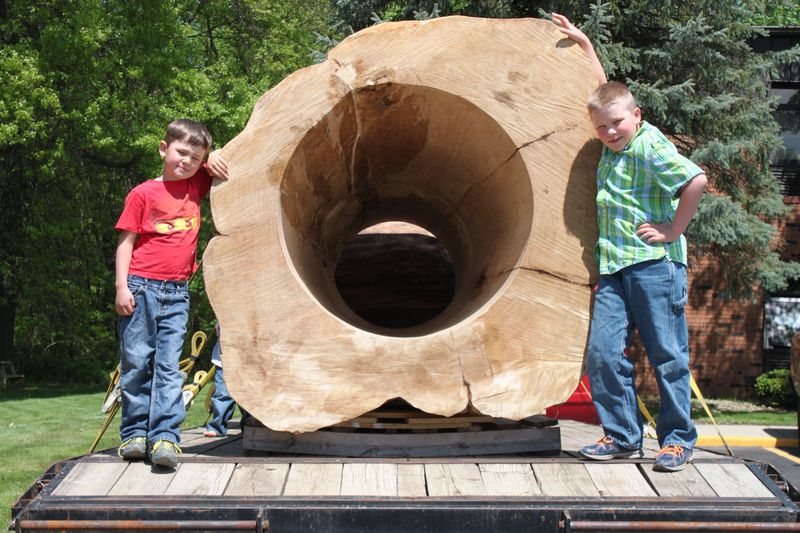
IC WOOD does not replicate the appearance of wood. IC WOOD is wood — salvaged, locally sourced, patented-process hollowed, and shipped raw. Where a GFRC tunnel log delivers a sterile, concrete-composite surface that happens to look like bark, an IC WOOD crawl tunnel delivers the actual scent, grain, temperature variation, and acoustic properties of a real tree. No mold can capture that. No composite can reproduce it.
For schools, public parks, and nature-themed play environments where the stated goal is connecting children with the real outdoors, specifying a concrete facsimile is a contradiction. IC WOOD is the only commercially available natural playground crawl log that delivers authentic timber at institutional scale, with the structural certifications and documented safety record to satisfy municipal procurement requirements.
| Feature | IC WOOD Reclaimed Timber | GFRC / Concrete Composite |
|---|
| Material | Authentic reclaimed hardwood timber | Glass fiber reinforced concrete cast |
| Sensory experience | Real wood grain, scent, and temperature | Molded concrete surface — no scent, uniform temp |
| Sourcing | Salvaged local hazard trees | Manufactured aggregate composite |
| Carbon impact | Sequesters carbon in long-lived timber product | Cement production is carbon-intensive |
| Surface texture | Genuine bark or smooth-peeled natural grain | Mold-cast bark replica |
| Chemical treatment | Ships raw — zero chemical additives | Pigmented and sealed at factory |
| Weight | Lighter per linear foot — easier installation | Significantly heavier — crane often required |
| Customization | Custom diameter, length, and finish | Fixed mold sizes only |
Salvaged Hazard Trees & Carbon Sequestration
Every IC WOOD log begins as a hazard tree — a standing timber identified by municipal arborists or private landowners as a structural risk. Rather than chipping these trees into mulch or sending them to landfill, IC WOOD harvests the full trunk, preserving the carbon that the tree spent decades sequestering. A single large-diameter log can represent 200 to 400 pounds of sequestered carbon that would otherwise be released through decomposition or combustion. Specifying IC WOOD is not just a playground decision — it is an environmental one, and one that qualifies for green building and sustainable procurement credits at many institutions.
Cost-Effective for Schools, Parks & Backyard Play Environments
The mechanical hollowing process that defines IC WOOD products is not just an engineering advantage — it is an economic one. By sourcing from the hazard-tree removal stream rather than virgin timber markets, IC WOOD keeps raw material costs dramatically lower than comparable hardwood products. The structural balancing effect of the hollowing process also extends service life well beyond untreated timber, reducing the total cost of ownership for school districts, municipal parks departments, and residential customers alike. A single IC WOOD crawl tunnel, properly sealed, will outlast multiple generations of plastic or composite alternatives.