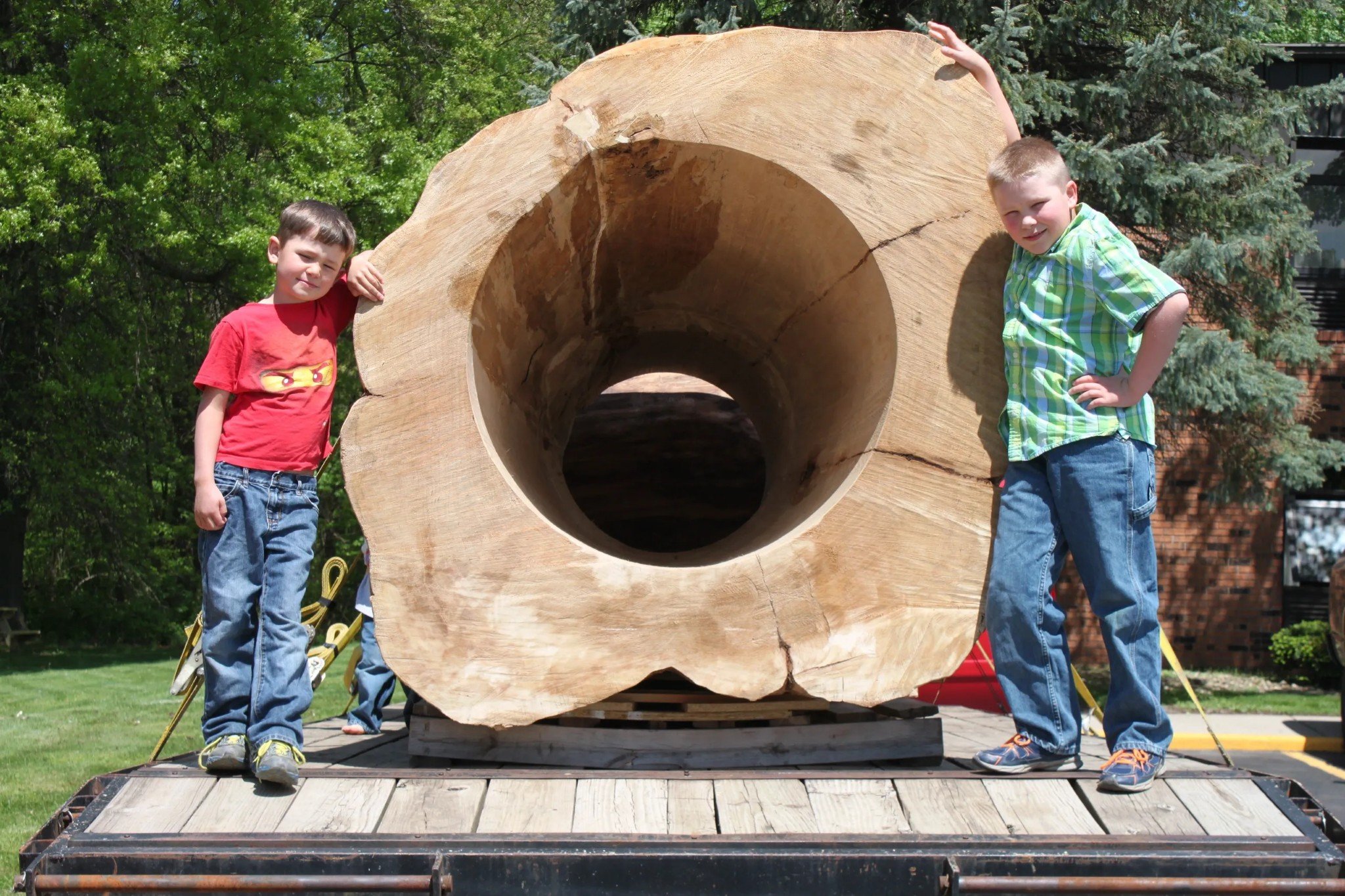
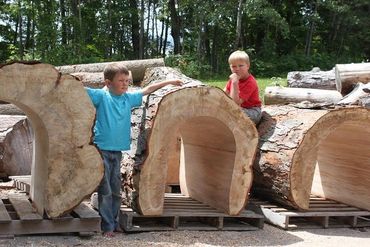
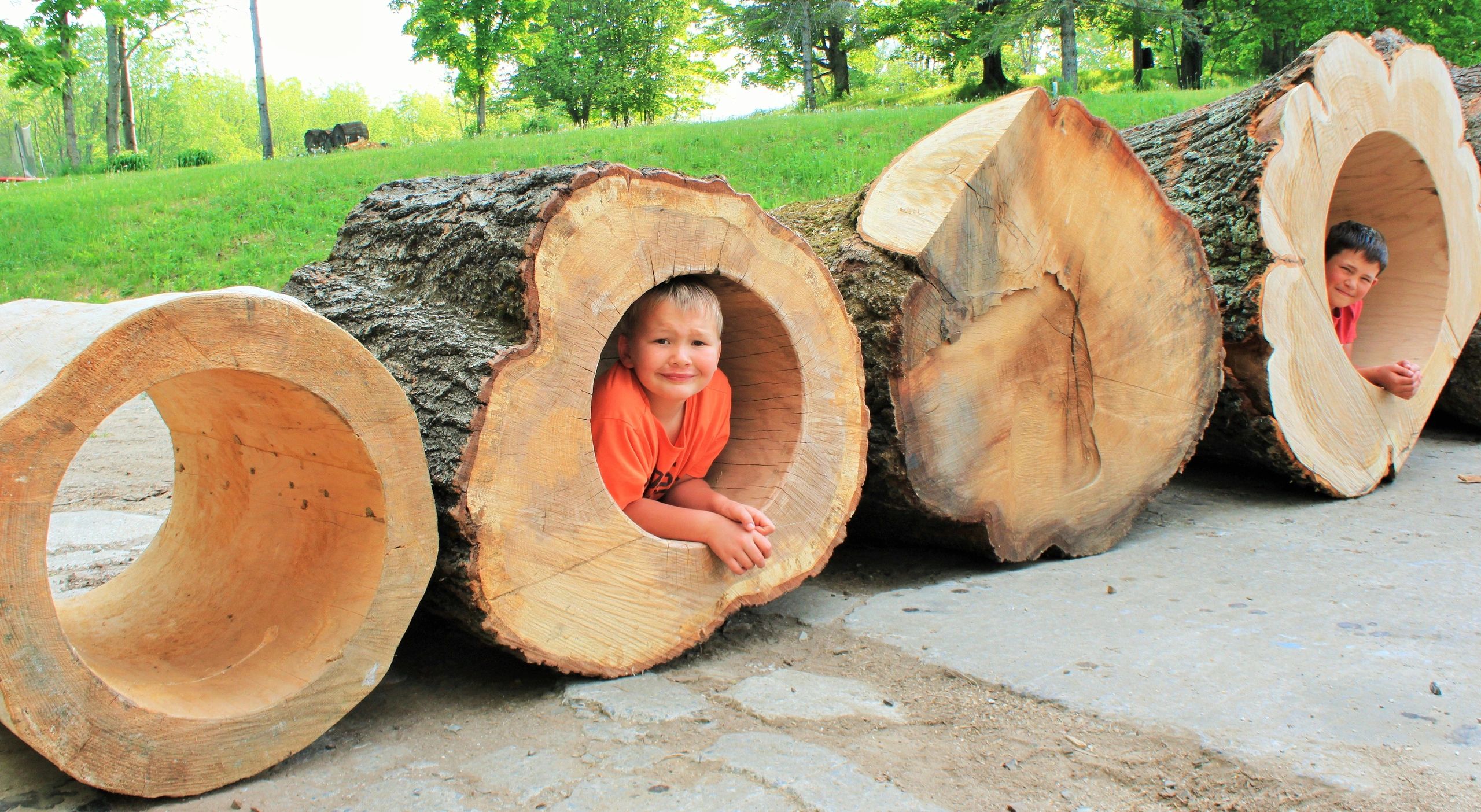
Red Panda Enrichment: Why the Hollow Log Is the Single Best Investment You Can Make
Red pandas are den-obligate, arboreal, and highly sensitive to environmental stress. A properly sized hollow log addresses all three of those realities at once. Here's what the research and our zoo partners tell us about getting it right.
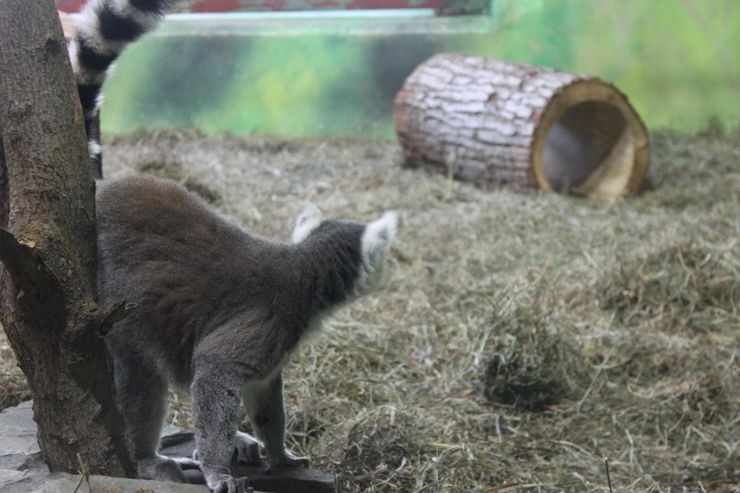
Red pandas are not easy animals to keep well.
They're highly specialized — adapted to cool, humid bamboo forests at elevation, with behavioral needs that don't map neatly onto the typical zoo enrichment toolkit. They're stress-sensitive. They're den-obligate. And they're arboreal in a way that means "off the ground" isn't just a preference — it's a welfare requirement.
A lot of facilities get the basics right: the right diet, the right temperature range, the right bamboo access. But enrichment programs for red pandas often underperform, and the reason is usually the same: the den structure isn't right.
A hollow log, properly sized and properly placed, fixes that. Here's why.
Red Pandas Are Den Animals — Full Stop
In the wild, Ailurus fulgens uses tree hollows, rock crevices, and dense vegetation as den sites for sleeping, thermoregulation, and raising cubs. This isn't occasional behavior. Red pandas spend the majority of their inactive time in or near a den structure.
In captivity, the absence of an adequate den site produces predictable welfare problems: elevated cortisol, stereotypic pacing, reduced reproductive success, and animals that spend their active periods in exposed, elevated positions that don't allow for natural rest postures.
The den isn't enrichment in the sense of "something to do." It's a foundational habitat element. Everything else — the bamboo browse, the foraging puzzles, the climbing structures — works better when the animal has a den it actually uses and trusts.
Why Natural Wood Outperforms Artificial Den Boxes
Most facilities use some form of artificial den box — plywood, fiberglass, or plastic construction, often painted or coated. These work. Animals will use them. But they consistently underperform natural hollow logs on the metrics that matter most.
Scent. Red pandas have a highly developed sense of smell. Natural wood carries a complex scent profile — terpenes, lignin breakdown products, the faint traces of the forest the tree came from. Artificial materials are scent-neutral at best, or carry chemical odors from coatings and adhesives. Animals investigate natural wood immediately and thoroughly. They investigate plastic boxes cautiously, if at all.
Texture. Red pandas use their forepaws constantly — gripping, climbing, manipulating. The irregular surface of natural bark provides grip and tactile stimulation that smooth artificial surfaces don't. Animals in contact with natural wood show more exploratory forepaw behavior, which is associated with lower stress and better cognitive engagement.
Thermoregulation. Wood is a natural insulator. A hollow log maintains a more stable interior temperature than a thin-walled plastic or fiberglass box — cooler in summer, warmer in winter. For a species adapted to cool mountain forests, this matters.
Visual naturalism. This one is harder to quantify, but keepers consistently report that animals introduced to natural hollow logs acclimate faster and show less vigilance behavior than animals introduced to artificial structures. The log looks like something from their world. The plastic box doesn't.
Sizing: Getting It Right
Red pandas are medium-small — adults typically 7 to 14 pounds, with a body length of 20 to 26 inches plus a substantial tail. The instinct is to size the den opening to the animal's body, but that's not quite right.
Red pandas prefer dens that feel snug but not cramped — an opening that requires them to duck slightly to enter, with an interior that allows them to turn around and curl up comfortably. Too large, and the den doesn't provide the security response. Too small, and the animal won't use it.
Our recommendation for red pandas:
- Diameter: 24"–28" interior opening
- Length: 36"–48" (longer is better — allows the animal to position itself away from the entrance)
- Configuration: Full round, positioned horizontally
- Placement: Elevated, ideally 6–10 feet off the ground, with a climbing structure leading to the entrance
The elevation matters. Red pandas den in trees, not on the ground. A ground-level hollow log will be used less frequently and with more vigilance behavior than the same log elevated to arboreal height.
Placement and Introduction
How you introduce the log matters as much as the log itself.
Before installation: Rub the exterior of the log with bamboo leaves and a small amount of the animal's own bedding material. This scent-marks the structure as familiar territory before the animal ever encounters it.
At introduction: Give the animal time. Don't watch from close range during the first few hours. Red pandas are more likely to investigate a new structure when they feel unobserved. Many keepers report that the animal enters the log for the first time during a quiet period — early morning or after closing.
After establishment: Once the animal has claimed the log as a den site, treat it as you would any primary den structure. Minimize disturbance to the interior. Allow scent accumulation — don't over-clean. The animal's own scent in the den is part of what makes it feel safe.
Multiple Animals, Multiple Logs
If you're housing a pair or a breeding group, the rule is simple: one log per animal, minimum. Red pandas are largely solitary in the wild and can be territorial about den sites. A single shared den structure in a multi-animal exhibit creates competition and stress that undermines the welfare benefit you're trying to provide.
Two logs, positioned at different elevations and different areas of the exhibit, gives each animal its own territory and its own secure retreat. This is especially important during breeding season and when cubs are present.
What Keepers Tell Us
We've shipped red panda logs to facilities across North America, and the feedback we hear most consistently is some version of the same thing:
"She went straight in and didn't come out for two hours."
That's the response you want. An animal that finds a structure, investigates it thoroughly, and then settles in — that's an animal that has found something that meets a real behavioral need.
The second most common piece of feedback: "I wish we'd done this sooner."
The IC WOOD Difference for Red Panda Exhibits
IC WOOD logs are crafted from reclaimed large-diameter timber using our patented Inner Circle Wood Method — a process that preserves the natural outer shell of the log while creating a smooth, safe interior. No adhesives. No synthetic materials. No coatings that could affect scent or safety.
Every log is inspected before shipping. We can provide weight and dimension specifications for your safety review, and we work with facilities to specify the right diameter, length, and configuration for your specific exhibit and animal.
We've worked with red panda facilities ranging from major AZA-accredited institutions to smaller regional zoos and private breeding programs. The log that works for a Smithsonian exhibit works just as well for a smaller facility — the animal's needs don't change based on the institution's size.
Ready to upgrade your red panda exhibit? Browse our catalog or contact us to talk through sizing and placement for your specific enclosure. We're happy to work directly with your animal care team.
Explore Topics
Written by
Bob Lauterbach
Content creator and writer sharing insights and stories.